

Our agentic search does not just look something up once - it plans, investigates, and double-checks its own work before you ever see an answer. Deep Research Mode, described below, is the standard search process behind it, automatically applied to every question.
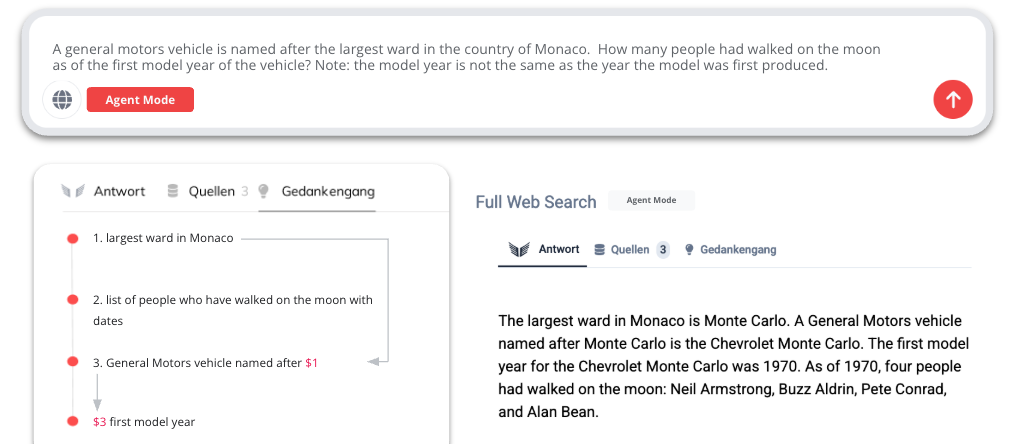
What Is a Knowledge Agent?
For us, the best definition is simple but powerful:A Knowledge Agent is a model that uses multiple tools in a loop to perform a complex task.Instead of just answering a single question, an agent can tackle multi-step problems that require accessing different information sources or performing several actions to reach a conclusion.
The Key Difference: Dynamic vs. Fixed Workflows
The true power of an agent lies in its autonomy. This is what separates it from a simple, fixed workflow.- A fixed search and workflow: Currently, even our high-precision search cannot handle multi-step searches as well as dealing with missing information or questions for which little information is available.
- A knowledge agent with our agentic search: Independently decides which tools to use, in what order, and how to combine their outputs. Based on the task, it might use Step 2, then Step 3, and then return to Step 1 to refine its findings. This enables much more complex insights and processes. At the same time, the search plan can be readjusted if needed.
Deep Research Mode: How Genow Thinks Before It Answers
Most AI search tools do one thing: they take your question, run one search, and hope for the best. If that first search misses the mark, the answer built on top of it will too. Deep Research Mode works differently. It behaves like a skilled analyst who has been handed your question: it thinks about what is really being asked, plans out how to find the answer, and checks its own work before reporting back. The result is a search that does not just match keywords, but genuinely understands your intent, however specific or layered your question is.Deep Research Mode does not have to be selected. It runs automatically for every question asked in an Agent (formerly known as a Use Case) - there is no separate tool or toggle to turn on.
Simple Question, Complex Question - Handled the Same Way
Not every question needs deep digging. “What spare part number corresponds to this item?” is concise and answered with a single, precise search. Other questions are not so simple. Take: “What are the key differences between our proposals in the automotive industry and the public sector, in terms of project team size and duration?” That question cannot be answered with one lookup. It has to be broken apart: find the automotive proposals, find the public sector proposals, extract team size and duration from each, then compare them. Deep Research Mode recognizes the difference automatically and scales its effort to match, without you ever having to choose a mode: a fast, direct search for straightforward questions, and a full planning-and-verification process for questions that combine multiple pieces of information.How Deep Research Thinks
Behind the scenes, Deep Research Mode works through a structured process, so that an early mistake never quietly carries through to your final answer.1
Builds a Research Plan
Your question is broken down into a logical set of sub-questions, in the order they need to be answered.
2
Investigates Every Angle
Each sub-question is researched on its own, in parallel where possible - searching your company’s knowledge assets and, if enabled for your Agent, the web.
3
Checks Its Own Work
Before moving on, Genow evaluates whether the documents it found actually answer the sub-question. If not, it automatically refines the search and tries again.
4
Delivers One Verified Answer
Once every part has been researched and verified, Genow combines the findings into a single, coherent, well-founded answer.
Core Principles of Our Agents
We build our Knowledge Agents with two critical principles in mind to make them reliable and trustworthy for enterprise use. 1. Human-in-the-Loop: Our agents are designed to know what they don’t know. If an agent encounters a high degree of uncertainty or lacks critical information to proceed, it will automatically pause and involve a human expert. This ensures that key decisions can be validated and knowledge gaps can be filled by the people with the right expertise. 2. Transparent Reasoning: When a Knowledge Agent performs deep research on internal company knowledge - for example, in sales, HR, service, legal, or finance - you can see its work. This feature allows users to follow the agent’s reasoning process step-by-step. This transparency is crucial for:- Building Trust: You can see exactly how the agent arrived at its conclusion.
- Enabling Intervention: Human experts can monitor and, if necessary, intervene in complex knowledge workflows in their specialized domains.
Why We Are “Agents-First”
Even though the Genow platform on it’s current stage already provides high value and higher efficiency to your teams, fixed workflows are sometimes limiting when it comes to complex processes. That’s why we focus on an Agents-First strategy. We build specialized, context-aware Knowledge Agents for your most important use cases. By providing them with the right context and a versatile set of tools, we enable them to deliver the accurate answers and complex insights your business needs.What’s Coming Next: Genow Workspace
At last, later this year, you will be able to connect to your favourite tools to fully perform your workflows and processes in the Genow platform. You will also be able to access all relevant knowledge systems. You can create and manage your tools in the admin panel. We are also building Genow Workspace, our next generation of agents that will decide the right search depth for you automatically - recognizing whether your task calls for a quick, single search or the full depth of Deep Research, and acting accordingly every time.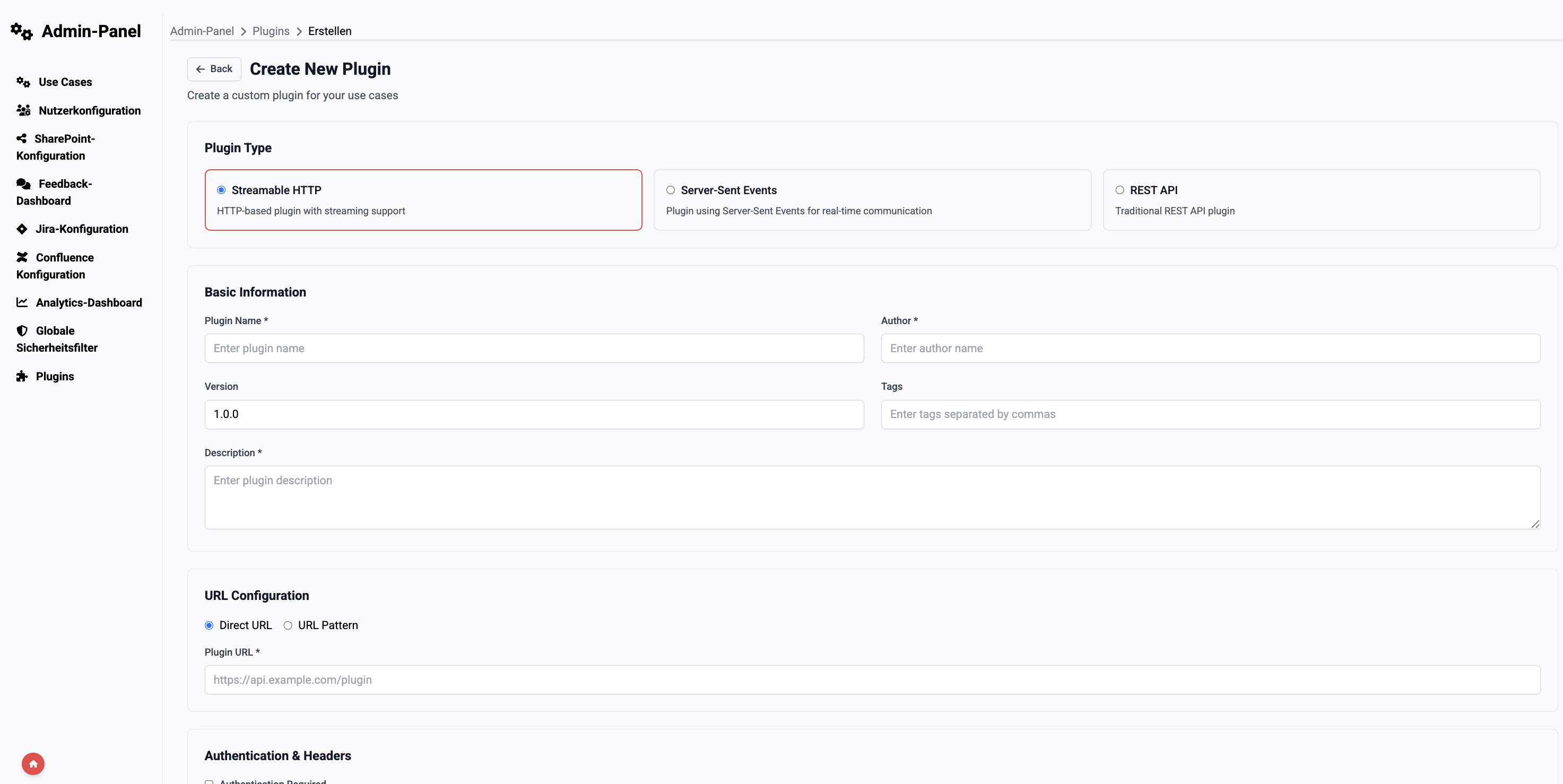
Genow Workspace is on our roadmap and not yet generally available. Reach out to your Genow contact to learn more about what is coming.
Learn More
Genow Search and Answer Generation
See how a regular Genow search works under the hood.
Agent Hub
Learn how to ask questions and use Agents day to day.